

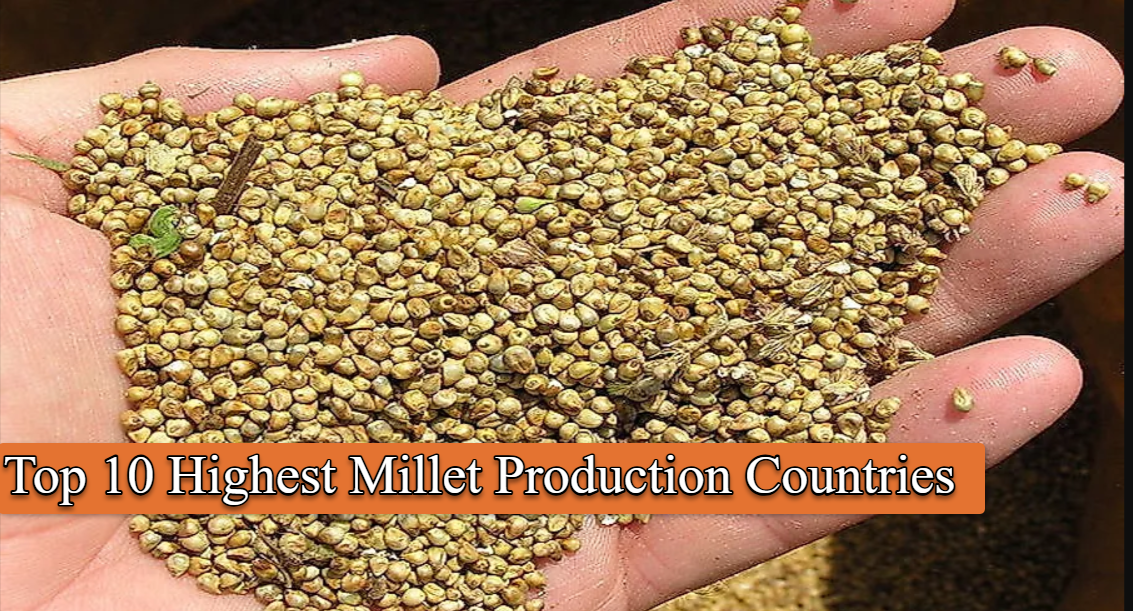
All over the world, Millet happens to be an important and versatile grain that is often thought of as to be a part of a healthy diet within various societies. The current food security concerns are quite difficult in many nations and Millet is a suitable option in this situation. Because it is drought resistant even in the most dry areas of the world, Millet is cultivated. In 2025, a variety of countries will have the most productive production. Here is the details of the top ones to help you.
Top 10 Highest Millet Production Countries
1. India 10,910,000 tonnes:
India produces 10,910,000 tonnes of millet, which is the largest millet in the world. Indian food is based on millet. The country’s agro-climatic zones allow millet production, which increases the amount of millet produced. Rajasthan is the largest producer of millet in India. Rajasthan is the source of 27% the country’s millet, despite its arid. The resilient rural residents of this state grow millet, including Bajra along with Pearl Millet. Our analysis of Rajasthan’s position as the country’s leading producer of millets covers its primary food crops, its nutritional benefits, and sustainable methods that make millets a an integral part of India’s unique agricultural tapestry. Rajasthan’s landscape of agriculture shows the ways that both modern and traditional methods can help farmers cope with tough conditions. In Rajasthan’s harsh climate the pearl millet bajra grows well and is able to increase production. This resilient crop, along with the experience of Rajasthan’s agriculture can provide an environmentally sustainable solution to the issue of water scarcity and the effects of climate change.
2. Nigeria – 5,000,000 tons:
Nigeria boasts of producing 5,000,000 tonnes of millet. It is the second largest producer worldwide. Millet is the most common carb in northern Nigerians. The commitment of Nigeria to agriculture and traditional food crops is a huge millet manufacturer. Northern Nigeria relies on millet as a staple food and crop that increases the intake of carbohydrates. Millet’s adaptability to various climates shows the country’s commitment on sustainable agriculture and provides the food security that is reliable. Millet production is a reflection of Nigeria’s dedication to heritage and agriculture. This dedication has helped propel Nigeria towards the very top position in the world millet market, and has increased production. Millet production demonstrates Nigeria’s vibrant agriculture. Nigeria was able to produce 2 million tonnes of millet by 2023. Between the years 2005 and 2023, millet production peaked at nine million tonnes in 2008 before dropping to a low level.
3. Niger – 2,955,000 tons:
Millet production ranks third in Niger with 2,955,000 tons. Niger is a fan of millet due to its economic and cultural value and uses it as a traditional ingredient in dishes and for celebrations. Millet’s impressive yield is due to its tolerance to drought and the nation’s commitment towards sustainable agriculture. Nigerian culture is portrayed through millet. The inclusion of millet in traditional rituals and meals shows the deep connection between Niger and the resilient crop of cereal. Millet that is flexible is essential to everyday life and events. The millet culture of Niger and its sustainable agriculture are popular. Millet farming and the ecosystems of agriculture are being protected across the entire country. This helps to support in the fight for food security and the environment. Dry Niger can make farming difficult however millet thrives. The Niger’s prolific millet production is due to its tolerance to deserts. Niger is the second largest millet-producing nation after Nigeria millet, covering more than 65% of the cultivated land. Niger produces three-quarters of its grains from millet. This demonstrates its importance in the field of agriculture.
4. China – 1,620,000 tonnes:
China is as the fourth largest producer of millet, with 1,620,000 tonnes. Chinese millet is diverse as it can be adapted to different climates. China’s diversification and the promotion of old grains such as millet are in line with global trends towards healthier and sustainable choices. Northern China’s most favored climate-friendly crop is millet. Millet is a great crop for northern China because of its drought-resistant and its adaptability. Millet is a vital organic, sustainable crop that supports the diversity of foods and also allows for planting modifications to structure. China’s diversification in agriculture is a key component of the efforts of all nations to eat better and more sustainable. Millet, a formerly used grain is nutritious and durable which is a perfect answer to the demand for numerous, sustainable and healthy food choices. China is a millet-growing country that supports sustainability and food security. It is a model for other countries.
5. Mali 1,152,331 tons:
The West African country of Mali produces 1,152,331 tonnes of millet, which is the sixth most globally. Millet is the main nutrition and food source in Mali which is a country which is where the security of its food supply has become a huge issue. The government’s steadfast assistance to small-scale farmers and technology for agriculture has helped make Mali an international millet producer. To improve the quality of food and ensure food security, Mali promotes millet cultivating and promoted. Millet production has increased by leveraging government support for small-scale farmers. These programs focus on critical nutrition needs and local food security. A Mali study found significant millet and sorghum output growth. Sorghum yields increased by 51 percent and millet 71 percent between 2014 and 2019. This accomplishment is due to concentrated efforts to enhance farmers’ knowledge and access to productivity-enhancing technologies.
6. Burkina Faso – 1,109,000 tons:
Burkina Faso produces 1,109,000 tons of millet. It is ranked sixth in the world, and is renowned for its environmentally sustainable agriculture and climate-resistant crops. Millet is an essential ingredient in Burkina Faso’s agricultural production because of government-sponsored promotion. Burkina Faso values millet for its durability. Millets are a major ingredient in BurkinaFaso’s traditional meals as well as dishes that go in addition to nutrition. People love “gnon” and “to de petit mil,” millet-based recipes from “Chez MAM SANK” promoter Mariam SANKARA. Millet’s diversity in cuisine is evident from its use in everyday life as well as its cultural enrichment. In Burkina Faso’s rich tradition millet is a symbol of protection. Cultural curator Konomba TRAORE declared “zoom-koom” (small millet juice) is a key element of Burkina Faso’s cultural heritage that is intangible.
7. Sudan 1 090,000 tonnes:
The millet production in Sudan is sixth globally with 1,090,000 tonnes. The ideal climate and advanced farming practices have boosted millet production. The security of food in Sudan and smallholder farmers’ initiatives have increased millet production. The agro-climate of Sudan supports the resilience of its millet crop. Sustainable farming practices and the advancements in technology boost the millet production commitment. Sudan has carefully planned its agricultural policies to help small-scale farmers to achieve food security. The measures increase millet production, demonstrating the government’s commitment to food security. The support of smallholder farmers can boost the rural economy.
8. Ethiopia 807,056 tonnes:
Ethiopia produces 807,056 tons millet, ranking eleventh globally. Millet is essential to food security, specifically in areas that suffer from drought. The strategic steps taken to modernize Ethiopia’s agriculture sector, improve infrastructure and increase the market access of farmers have allowed for sustained production of millet. Dry Ethiopia grows millet for food security. Its nutritional qualities and capacity to withstand extreme conditions are essential to Ethiopia’s food security. Ethiopia’s millet increase promotes sustainable agriculture as well as environmental resilience. Finger millet dominates Ethiopia’s agriculture. The nutritious and rich crop is widely grown in semi-arid regions of the tropics. It is therapeutic and adaptable to climate. is a good source of iron, calcium and dietary fiber. It also has gluten-free ingredients. Ethiopia is the source of genetic diversity in this crucial crop, which emphasizes its significance in the global agricultural landscape.
9. Chad – 582,000 tonnes:
Chad is a large millet producer, with around 582,000 tons of seventh in the world. Chad considers millet to be an essential food source, especially in regions where other crops are suffering. Chad produces plenty of millet since the government encourages development of agriculture and healthy crops like millet. In the challenging conditions for Chad’s agricultural production millet is vital. Millet’s adaptability to different types of soils and temperatures make them essential for food security. Millets’ flexibility helps farmers in areas that other crops fail.
10. Senegal – 572,155 tons:
Senegal is ranked 10th and the last millet producer with 572,155 tonnes. Millet production as well as its cultural significance makes Senegal an industry leader. Government programs encourage sustainable agriculture and let small-scale farmers in Senegal to produce millet. Millet is a staple in the cuisine of Senegal. Millet is an essential ingredient in Senegalese households because of its durability and adaptability to local agriculture techniques. Production of millet in Senegal is highly successful due to the natural environment as well as government policies to encourage sustainable agriculture. Small-scale farmers’ aid and sustainable farming has increased the production of millet in the country. Sustainability in Senegal is about ensuring millet cultivation’s future, and also creating a robust and sustainable agricultural industry.
Conclusion:
The importance of the millet industry is vast. Not just that millet cultivation can play a key role in providing food for many people around the world, but also the food security is heavily influenced by millet. As the challenges of food production increase millet can be seen as an essential catalyst.