

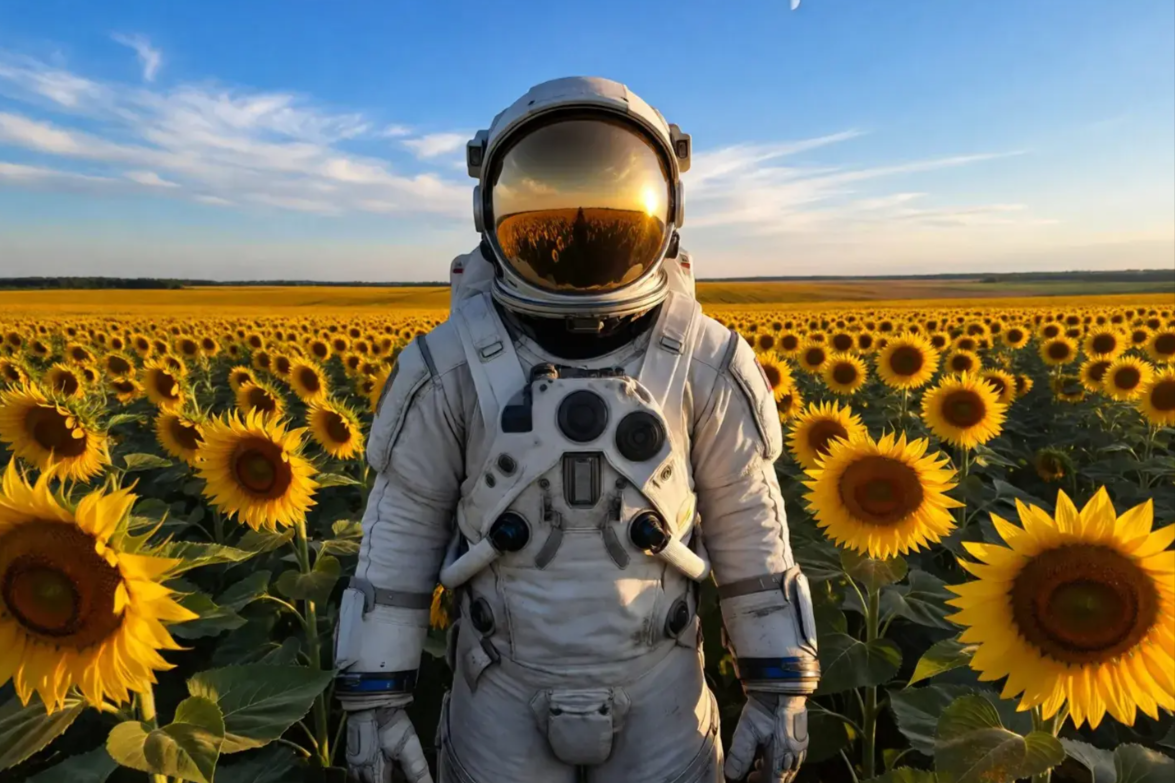
AI image generation has changed significantly in just a few years. Earlier image-generation tools often produced basic or inconsistent results and had difficulty understanding detailed instructions. Users could describe an idea, but the output might miss important objects, misunderstand the requested style, or contain noticeable visual errors. Modern AI image generators have become much more capable, producing detailed images from relatively simple text descriptions while giving users greater control over the final result.
The difference comes from advances in artificial intelligence, deep learning, language processing, and computer vision. Modern systems are better at understanding what a person means rather than simply matching individual words in a prompt. They can recognize relationships between objects, interpret artistic styles, and generate visual elements such as lighting, composition, perspective, textures, and depth.
So, what makes today’s AI image generators so powerful? Several technologies work together behind the scenes. Advanced neural networks allow models to learn complex visual patterns, while improved language understanding helps them translate natural-language instructions into meaningful visual concepts. Better training methods, higher-quality datasets, faster computing, and more sophisticated generation techniques also contribute to the quality of the results.
Understanding these developments makes it easier to see why text-to-image AI has become useful for everything from creative experimentation and concept development to marketing, education, product visualization, and digital content creation.
Understanding How AI Image Generators Work
At a basic level, an AI image generator converts a user’s description into a visual result. The process begins when someone enters a text prompt describing what they want to see. This might be a simple request such as a landscape at sunset or a much more detailed description involving several objects, a particular artistic style, lighting conditions, and camera perspective.
The AI first processes the language in the prompt. Instead of treating the words as isolated instructions, modern models can analyze their meaning and relationships. For example, a prompt describing “a small wooden cabin beside a frozen lake surrounded by snow-covered mountains” contains several separate elements and relationships between them. The system needs to understand that the cabin is beside the lake and that the mountains form part of the surrounding environment.
The model then translates these concepts into information that can guide the image-generation process. Many modern systems use techniques based on diffusion or related generative architectures. In a simplified explanation, the model begins with visual noise or another initial representation and gradually transforms it into an image that matches the information contained in the prompt.
During this process, the model repeatedly predicts what visual information should be present and adjusts the developing image. As generation progresses, broad elements such as the scene layout are refined into recognizable objects, textures, colors, lighting, and smaller details.
This is why a modern text-to-image system can do more than simply place objects onto a blank canvas. It attempts to construct a complete visual scene based on the meaning and context of the user’s instructions.
Advanced AI Models and Deep Learning
One of the biggest reasons modern image generators have become so capable is the development of advanced deep-learning models. These systems use large neural networks containing many interconnected computational layers. During training, the networks process enormous amounts of visual and textual information and learn patterns that can later be used to generate new images.
Rather than memorizing individual pictures, a well-trained model can learn broader relationships between visual features and concepts. It can develop an understanding of how different types of objects typically look, how lighting affects a scene, how artistic styles differ, and how certain words or descriptions relate to visual characteristics.
The connection between language and imagery is particularly important. When a model has learned from text and images together, it can associate descriptions with visual concepts. Words such as “watercolor,” “cinematic,” “minimalist,” or “photorealistic” can influence the visual characteristics of the generated result, while descriptions of objects and environments help determine what appears in the scene.
Deep learning also allows models to capture details at different levels. A generated image needs to have a coherent overall composition, but it also needs smaller elements such as realistic textures, facial features, shadows, reflections, and object boundaries. More advanced architectures and training techniques can improve the model’s ability to handle these different levels of visual information.
As these models have become larger and more sophisticated, their ability to identify patterns and relationships has improved. This has contributed to more detailed, realistic, and contextually appropriate images compared with earlier generations of AI image-generation technology.
Better Text-to-Image Understanding
The quality of an AI-generated image depends heavily on how well the system understands the user’s prompt. Modern image generators have made significant progress in interpreting natural language, allowing users to describe visual ideas in a way that is closer to ordinary human communication.
A modern system can often process prompts containing multiple objects, actions, characteristics, and relationships. For example, a user might request a cyclist riding through a forest during early morning, with sunlight passing through the trees and mist covering the distant background. Producing such an image requires the model to understand not only each individual concept but also how they should exist together within one scene.
Modern models can also interpret instructions related to composition and visual presentation. Users can describe the position of subjects, the desired perspective, the type of lighting, the atmosphere, or a particular artistic approach. Terms such as close-up, wide-angle, overhead view, soft lighting, dramatic shadows, or editorial photography can provide additional information about the intended appearance.
Detailed prompts can therefore give the model more context about the desired result. However, adding more words does not automatically guarantee a better image. Clear and specific instructions are generally more useful than simply filling a prompt with unrelated keywords. A well-structured description helps the model understand which elements matter and how they should relate to one another.
This improved understanding is one of the major differences between modern text-to-image systems and earlier tools. Instead of relying primarily on short, rigid commands, users can increasingly communicate visual ideas using natural language.
High-Quality and Realistic Image Generation
Another major advancement is the overall quality of the images produced by modern AI systems. Earlier generators could create recognizable scenes, but images often contained obvious inconsistencies, limited detail, unnatural textures, or poorly rendered objects. Newer systems are much better at producing visually complex results.
Higher-resolution generation allows images to contain more visible detail, while improved models can create more convincing textures and surface characteristics. Materials such as glass, metal, wood, fabric, skin, and water can be represented with greater visual variation, making the final image appear more natural.
Lighting and depth have also improved considerably. Modern generators can produce scenes with more believable highlights, shadows, reflections, and atmospheric effects. They can use lighting descriptions in a prompt to influence the mood and appearance of an image, whether the user wants soft natural daylight, a dramatic studio setup, or a cinematic nighttime scene.
Faces and human figures have historically been challenging for image-generation systems, but newer models have become better at handling facial features, body proportions, clothing, and other fine details. Similar improvements can be seen in environments, architecture, vehicles, animals, and everyday objects.
The result is a growing ability to create images that can look polished enough for professional creative workflows. Although AI-generated visuals can still contain mistakes and require human review, the gap between experimental AI imagery and conventional digital image creation has become much smaller.
Ultimately, the power of modern AI image generators does not come from a single technological breakthrough. It comes from the combination of advanced models, better language understanding, extensive training, improved generation techniques, and increasingly sophisticated control over visual details.
Greater Control Over the Creative Process
Modern AI image generators are not limited to producing a single image from a short text prompt. They increasingly give users control over how the final image should look, making AI generation feel more like an interactive creative process. Users can describe a visual style, specify the composition, adjust the dimensions, provide reference material, and refine the result through multiple iterations.
Style and visual direction are among the most useful controls. A user can request a particular artistic approach, such as realistic photography, digital illustration, watercolor, 3D rendering, or a cinematic visual style. Additional descriptions can influence elements such as lighting, color mood, atmosphere, and level of detail.
Composition and framing can also be guided through prompts and available controls. Users may specify whether the subject should appear in a close-up, wide shot, overhead view, centered composition, or another arrangement. This is particularly useful when an image needs to fit a specific creative purpose rather than simply look visually appealing.
Aspect ratios and image dimensions provide another layer of flexibility. A square image may work well for some social media platforms, while a landscape format can be more suitable for websites, presentations, or banners. Being able to choose the appropriate dimensions helps users generate visuals for their intended destination from the beginning.
Image-to-image generation and reference images have expanded creative control even further. Instead of relying entirely on written instructions, users can provide an existing image to communicate elements such as composition, appearance, pose, or visual style. The AI can then use that information as a guide while creating a new variation.
Perhaps the biggest advantage is the ability to edit and refine an existing result. If an image is close to what the user wants but contains an unwanted object, an incorrect detail, or an unsuitable visual element, modern AI tools can often modify specific parts rather than requiring the entire image to be generated again. This iterative approach makes experimentation faster and gives creators more opportunities to reach the desired result.
Consistency and Context Awareness
Creating a visually attractive image is only part of the challenge. An effective AI image generator also needs to understand how different elements relate to one another. Modern systems have become better at maintaining context within a scene, which helps produce images that feel more coherent.
For example, when a prompt describes a person standing beside a red car on a city street, the relationship between the person, vehicle, road, and surrounding buildings matters. The model needs to understand where each element belongs and how they should interact visually. Improvements in contextual understanding help reduce situations where objects appear in confusing or physically unrealistic positions.
Character and object consistency is also becoming increasingly important. Creative projects often require the same character, product, or visual element to appear across multiple images. Maintaining recognizable features, clothing, proportions, colors, or other characteristics can make a series of AI-generated visuals feel more connected.
Spatial relationships are another important part of this progress. Modern models can better interpret descriptions involving positions, distances, foregrounds, backgrounds, and interactions between objects. This allows a prompt to communicate not only what should appear in an image but also where different elements should appear.
Consistency is particularly valuable in storytelling and visual development. An illustrator developing scenes for a story may need recurring characters and environments to maintain a recognizable appearance. Similarly, businesses creating branded content may want products and visual elements to remain consistent across different assets.
These capabilities are still not perfect, and complex multi-image consistency can remain challenging. However, improved context awareness makes modern image-generation systems more practical for creative projects that require more than a single standalone image.
Faster Generation and More Accessible Creativity
Speed is another factor that has helped AI image generation become part of everyday creative work. Advances in computing hardware, model architecture, and optimization have made it possible to generate images much more efficiently than many earlier systems could.
Faster generation means creators can test several ideas without spending significant time manually producing each version. A designer might try different compositions, lighting conditions, backgrounds, or styles and compare the results before deciding which direction to develop further.
AI image generators have also lowered the technical barrier to visual creation. Traditional digital artwork and graphic design can require knowledge of specialized software, illustration techniques, image editing, and composition. AI tools do not eliminate the value of these skills, but they allow people with limited design experience to turn basic ideas into visual concepts using natural language.
This accessibility can be useful for students, writers, marketers, entrepreneurs, content creators, and other people who need visuals but may not have access to a professional designer for every project. A person can start with a rough idea, generate an initial image, evaluate it, and gradually refine the concept.
The ability to experiment quickly is particularly valuable. Instead of committing to one visual concept immediately, users can generate multiple possibilities and use them to explore different creative directions. This turns image generation into a form of rapid visual brainstorming.
As a result, modern AI image generators are not simply tools for producing finished pictures. They can also function as creative assistants that help people visualize ideas that might otherwise remain difficult or expensive to produce.
Multimodal AI and Modern Image-Creation Workflows
Modern AI systems are increasingly becoming multimodal, meaning they can work with different types of information rather than relying exclusively on text. In image creation, this can include combinations of written prompts, existing images, reference materials, and generated visuals.
Text remains an important way to communicate an idea. A user can describe the desired scene, style, or changes using natural language. However, an image can provide information that would be difficult to explain through words alone. A reference image, for example, can communicate composition, color relationships, subject appearance, or general visual direction.
Reference-based generation allows creators to combine these inputs. A user might provide an image of a product and a text description explaining the desired environment, lighting, and composition. The AI can use both sources of information to produce a new visual concept.
AI-assisted editing is another important part of this workflow. Rather than generating an entirely new image every time something needs to change, creators can make variations, modify specific elements, remove unwanted objects, or adjust the overall appearance. This creates a more flexible process in which generation and editing work together.
These developments are gradually moving AI image generation beyond a simple “type a prompt and receive an image” model. It is becoming part of broader creative workflows where people can move between generating, editing, reviewing, and refining visual content. The human still provides the creative direction, while AI can handle parts of the production process more quickly.
Practical Uses of Modern AI Image Generators
The growing capabilities of AI image generators have made them useful across a wide range of fields. Their applications extend beyond experimentation and can support practical visual-content needs.
Marketing and Social Media Content
Businesses and content creators can use AI-generated visuals for social media posts, promotional concepts, campaign ideas, advertisements, and other digital materials. Instead of creating every visual from scratch, teams can quickly explore different concepts and adapt them to different platforms.
Concept Art and Creative Projects
Artists, designers, writers, and filmmakers can use AI-generated images to explore ideas before investing time in detailed production. Concept visuals can help communicate the appearance of characters, environments, scenes, or creative directions.
Product Visualization
AI image generation can help visualize products in different environments and settings. For example, a product concept can be placed in a lifestyle scene or presented with different backgrounds and visual styles. This can be useful during early-stage ideation and presentation.
Education and Presentations
Teachers and students can create visuals to explain concepts, illustrate presentations, or make educational material more engaging. Instead of searching for an existing image that only partially matches an idea, users can generate a visual based on the specific concept they want to communicate.
Storytelling and Visual Development
Writers and storytellers can use AI-generated imagery to visualize characters, locations, scenes, and narrative ideas. Generating multiple versions can help develop the visual identity of a fictional world before the final artwork is produced.
Website, Blog, and Digital Content Creation
Websites and blogs often need images that match the subject and tone of their content. AI image generators can help creators develop custom illustrations, featured visuals, backgrounds, and supporting graphics without relying exclusively on generic stock imagery.
Personal Experimentation and Idea Development
Perhaps one of the simplest applications is personal creativity. Users can turn rough ideas into visual experiments, test different artistic styles, or explore concepts simply to see how they might look. This makes AI image generation useful not only for professional production but also for learning, brainstorming, and creative exploration.
Choosing the Right AI Image Generator
With so many AI image-generation tools available, choosing the right one depends on more than simply looking at the images it can produce. Different platforms are designed for different creative needs, so it is useful to consider several factors before deciding which tool fits a particular project.
Image quality and realism are among the first things to evaluate. A tool intended for product visualization or realistic scenes may need strong handling of textures, lighting, faces, and fine details, while an illustration-focused project may place more importance on artistic styles and visual creativity.
Prompt understanding is equally important. A capable image generator should be able to interpret natural-language instructions and understand how multiple elements relate to one another. This becomes especially important when a prompt contains several subjects, specific positioning, lighting requirements, or detailed stylistic instructions.
Editing and customization capabilities can also make a significant difference. Some workflows require more than generating an image once. Features for modifying selected areas, creating variations, using reference images, or refining an existing result can provide greater flexibility.
Generation speed matters when users need to test multiple concepts. Faster results allow creators to experiment with different prompts and approaches without significantly interrupting their workflow.
Ease of use is another consideration. A technically powerful tool may still be difficult to use if its interface is complicated or its controls are difficult to understand. Straightforward interfaces can make image generation more accessible to beginners while still providing useful options for experienced users.
The available creative controls should also match the project. Options for aspect ratio, style, composition, reference images, and image editing can be valuable when a creator needs more precise control over the final output.
Ultimately, the right AI image generator depends on the intended use case. A social media creator may prioritize speed and ease of use, while a designer may need detailed editing controls and consistency. Evaluating the tool against the actual requirements of a project is more useful than choosing based on a single feature.
Where Tools Like Nano Banana 2.5 Fit In
The development of newer AI image-generation tools reflects the broader progress taking place across the field. Modern systems increasingly combine improved language understanding with better visual quality, editing capabilities, and creative control rather than focusing on image generation alone.
This combination is important because generating an attractive image is only one part of a successful creative workflow. The system also needs to understand what the user is asking for and translate those instructions into an appropriate visual result. When strong prompt interpretation is combined with detailed image generation and useful creative controls, users have more opportunities to refine an idea and achieve the intended outcome.
Tools such as the Nano Banana 2.5 AI image generator can be viewed within this broader shift toward more capable and flexible image-generation systems. Rather than treating AI as a simple image-making shortcut, modern tools are increasingly designed around the interaction between human instructions and AI-assisted visual creation.
The significance of these developments is not limited to any one platform. They demonstrate how AI image generation is moving toward workflows where users can describe an idea, evaluate the result, make adjustments, and continue refining the visual concept. This makes prompt understanding, image quality, and creative control important factors when comparing modern generation tools.
Limitations of Modern AI Image Generators
Despite their rapid development, AI image generators are not perfect. They can produce impressive visuals while still making mistakes that require human attention. Understanding these limitations is important when using AI-generated content for practical or professional purposes.
One common issue is the incorrect interpretation of complex prompts. When a description contains many instructions or complicated relationships between objects, the model may prioritize some elements while overlooking others. The resulting image may look convincing overall but still fail to follow specific parts of the original request.
AI-generated images can also contain distorted details or visual artifacts. Hands, facial features, object shapes, reflections, and small background elements may occasionally appear unusual or inconsistent. Even when these problems are subtle, they can become noticeable when an image is examined closely.
Another challenge involves text inside generated images. Creating a specific word, sentence, logo, or other precise written content can be difficult for image-generation models. While newer systems have improved in this area, important text-based visuals may still require additional editing or verification.
Maintaining perfect consistency across multiple generations can also be challenging. A character, product, or environment may change slightly between images, even when the creator wants it to remain identical. This can be particularly noticeable in storytelling, branding, or projects that require a series of connected visuals.
For these reasons, human review remains an important part of AI-assisted image creation. AI can accelerate experimentation and production, but creators still need to check the output, identify errors, make corrections, and decide whether the final image actually meets the project’s requirements.
The Future of AI Image Generation
AI image generation is likely to continue moving toward greater precision, flexibility, and integration with other creative technologies. One important area of development is more accurate prompt understanding. Future systems may become better at following complex instructions, understanding subtle relationships, and distinguishing between important and secondary details within a prompt.
Image editing and controllability are also expected to improve. Instead of generating a completely new image to make a small change, users may be able to describe exactly what they want modified while preserving everything else. More precise controls could make AI generation increasingly useful for professional design and production workflows.
Another major area is consistency across multiple images. Improvements in character, object, and environment consistency could make it easier to use AI for longer visual projects, including illustrated stories, advertising campaigns, product presentations, and other collections of related images.
AI image generation is also likely to become more deeply integrated into creative software and digital workflows. Rather than existing as a separate tool, image generation could become one part of a larger process involving writing, design, editing, presentation, video, and other forms of content creation.
This points toward a broader shift from simple image generation to AI-assisted visual creation. The future may involve systems that can understand a creative objective, generate multiple visual options, respond to feedback, make targeted changes, and help organize the resulting assets. Human creators would continue to provide direction and judgment while AI handles increasingly complex parts of the production process.
Conclusion
Modern AI image generators have become powerful because several technological advances work together. Advanced models allow them to learn complex visual patterns, while improved language understanding helps translate natural-language descriptions into meaningful visual concepts. Higher image quality, better contextual awareness, creative controls, faster generation, and multimodal capabilities have further expanded what these systems can do.
Their strength does not come from any single feature. It comes from the combination of advanced AI models, language understanding, visual quality, creative control, speed, and accessibility. Together, these capabilities allow people to move from a basic idea to a visual concept with less technical effort and much faster experimentation.
At the same time, AI image generation still has limitations, making human review and creative judgment important. As the technology develops, improvements in consistency, editing, prompt interpretation, and workflow integration could make these systems even more useful.
The direction is clear: AI image generation is gradually moving beyond simply creating pictures from text. It is becoming part of a broader approach to digital creativity, where people can communicate ideas naturally and use AI to explore, develop, and refine those ideas visually.